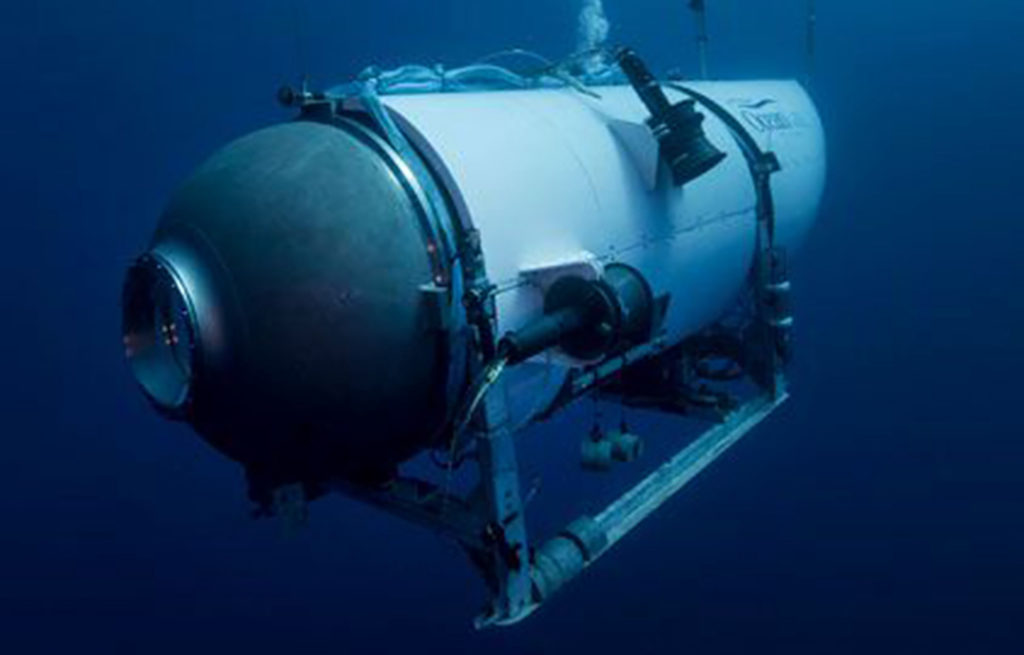
Amna Nawaz:
On the search and how a possible rescue could be carried out, I'm joined by retired U.S. Navy submarine Captain David Marquet.
Captain Marquet, welcome.
You heard what the rescuers are up against there. If that vessel hasn't surfaced somehow and is still underwater, how are they carrying out a search like this? What are they looking for? And what are they doing?
Capt. David Marquet (RET.), U.S. Navy: There's two components of the search.
First, there's the search on the surface of the water. This can happen. You can cover wide areas with airplanes that fly relatively quickly, and they have radars. And it's — now it's getting dark, but, during the daytime, you also use your eyeballs. And so they can cover a wide area.
I'm pretty confident, if that ship were at the surface it would have been found by now. Underwater, at the depths where the Titanic is, two-and-a-half miles down, it's a totally different story.
First of all, you hope that, if they were in there and they were capable, they would be making noises, they would be using pingers, or the underwater telephone, or just simply banging on the hull of the submarine. And those sounds would be picked up by the sonar buoys which are being dropped and the other ships that are listening. We're not hearing that either.
So now I'm fearful that something catastrophic has happened, because, when there's an abrupt termination of communications like that, that would signal multiple systems going down at the same time, or one catastrophic failure which affected the entire vessel.
ncG1vNJzZmivp6x7sa7SZ6arn1%2Bjsri%2Fx6isq2ejnby4e9Geq6KqlZl6r63VsmScmaCprqq6jJ6vqaSRnru0eceormaZXaeytK%2FUnmSonl2ptaZ5zKKqrKGenHq1tdOapaKbXajCo3nCqKylnF2Xsm6vwKupop2UYry2wA%3D%3D